
Ripples to Waves
Ripples to Waves
A localized, standards-aligned high school environmental science course.
Project initiated 2022, ongoing.

Teacher facilitating a stream table investigation for students to figure out how the Mississippi River forms land in a Collegiate Academies high school environmental science class
Program description
Ripples to Waves is a multi-year project that designs, tests, and refines a growing suite of high school environmental science units–each centered on an environmental issue of direct relevance to life in Southeast Louisiana. Ripple Effect leads the design of each unit from the ground up: building the driving questions and storyline, designing field-based investigations and data-collection routines, piloting lessons in real classrooms, and revising based on what we learn. Along the way, we draw on different scientists, engineers, and local experts to ground each unit in real, local knowledge.
Each unit is piloted and field-tested with teachers and students at Collegiate Academies before being refined for broader use. As the suite grows, we're working toward a fully standards-aligned course sequence.
Teacher Learning
Ripples to Waves helps high school teachers understand complex environmental challenges while developing their belief, confidence, and skill to guide students through a learning process that is motivated by their questions and ideas.
Teachers begin the program by building their own knowledge of place-based water issues in Southeast Louisiana during field-based excursions. Subsequent curriculum-based professional development days give them an opportunity to continue to develop their science content knowledge, familiarize themselves with the curriculum, and practice facilitating student-led inquiry. They also receive daily live coaching in the classroom from program leaders throughout the unit. Feedback sessions provide opportunities to analyze student work, use data to adjust lesson plans, and practice teaching while receiving feedback from their fellow teachers and program leaders.
Curriculum
Ripples to Waves helps high school teachers understand complex environmental challenges while developing their belief, confidence, and skill to guide students through a learning process that is motivated by their questions and ideas.
Teachers begin the program by building their own knowledge of place-based water issues in Southeast Louisiana during field-based excursions. Subsequent curriculum-based professional development days give them an opportunity to continue to develop their science content knowledge, familiarize themselves with the curriculum, and practice facilitating student-led inquiry. They also receive daily live coaching in the classroom from program leaders throughout the unit. Feedback sessions provide opportunities to analyze student work, use data to adjust lesson plans, and practice teaching while receiving feedback from their fellow teachers and program leaders.
About the Units
Unit 1: Stormwater Flooding in New Orleans
Status: Piloted, revised, and field-tested.
-
In this 19-lesson unit, students trace the story of nutrients from Midwestern farms to the Gulf of Mexico, uncovering how agricultural runoff fuels seasonal hypoxia, across two chapters:
Chapter 1: Students learn how spring runoff carries nutrients from Midwestern farms down the Mississippi River to the Gulf of Mexico, fueling the algae blooms and oxygen loss that create a seasonal "dead zone."
Chapter 2: Students design solutions to raise oxygen levels in the Gulf directly, then discover this isn't feasible at scale — shifting their focus upstream to the farming practices and mitigation strategies that could reduce nutrient pollution at the source, across the entire Mississippi River watershed.
-
HS-ESS2-2 (Feedback in Earth's Systems), HS-ESS3-4 (Reducing Human Impact Design Solutions), HS-ESS2-5 (Interactions of the Hydrologic and Rock Cycles)
Unit 2: Gulf Dead Zone
Status: Piloted and revised. Currently being field-tested.
-
In this 13-lesson unit, students trace the story of nutrients from Midwestern farms to the Gulf of Mexico, uncovering how agricultural runoff fuels seasonal hypoxia, across two chapters:
Chapter 1: Students learn how spring runoff carries nutrients from Midwestern farms down the Mississippi River to the Gulf of Mexico, fueling the algae blooms and oxygen loss that create a seasonal "dead zone."
Chapter 2: Students design solutions to raise oxygen levels in the Gulf directly, then discover this isn't feasible at scale — shifting their focus upstream to the farming practices and mitigation strategies that could reduce nutrient pollution at the source, across the entire Mississippi River watershed.
Status: Piloted, revised, and currently in field testing with teachers and students at Collegiate Academies.
-
HS-LS2-1 (Carrying Capacity of Ecosystems), HS-LS2-2 (Factors Affecting Biodiversity), HS-LS2-6 (Ecosystem Stability and Change), HS-LS2-7 (Reducing Human Impact Design Solutions), HS-EVS2-1 (Limiting Non-Point Source Pollution)
Unit 3: Hurricanes
Status: In development.
-
In this 20-lesson unit, students investigate why hurricanes happen, how they move, and how their impacts can be mitigated through science, preparation, and community action — organized around the driving question, "How can our community better prepare for and recover from hurricanes as our climate changes?" across three chapters:
Chapter 1: Students learn how centuries of observation and measurement — often at great personal risk — built our current scientific understanding of hurricanes.
Chapter 2: Students learn to understand hurricanes as heat engines that transfer energy between ocean and atmosphere, and explore how a changing climate may affect their behavior.
Chapter 3: Students learn how storm surge forms and how built and natural barriers respond to it, developing an informed understanding of where their own community fits into that picture.
-
Focus Standards: MS-ESS3-2 (Forecasting Natural Hazards), HS-ESS2-4 (Energy Flow and Hurricane Formation), HS-ESS3-1 (Natural Resources, Hazards, and Human Activity), HS-EVS1-3 (Risk-Benefit Analysis of Environmental Decisions)
Secondary Standards Addressed: MS-ESS2-5 (Air Mass Interactions and Weather), HS-ESS2-2 (Feedbacks in Earth's Systems), MS-ESS2-6 (Atmospheric and Oceanic Circulation Patterns)
-
![]()
Students use a model to investigate the capacity of the New Orleans drainage system.
-
![]()
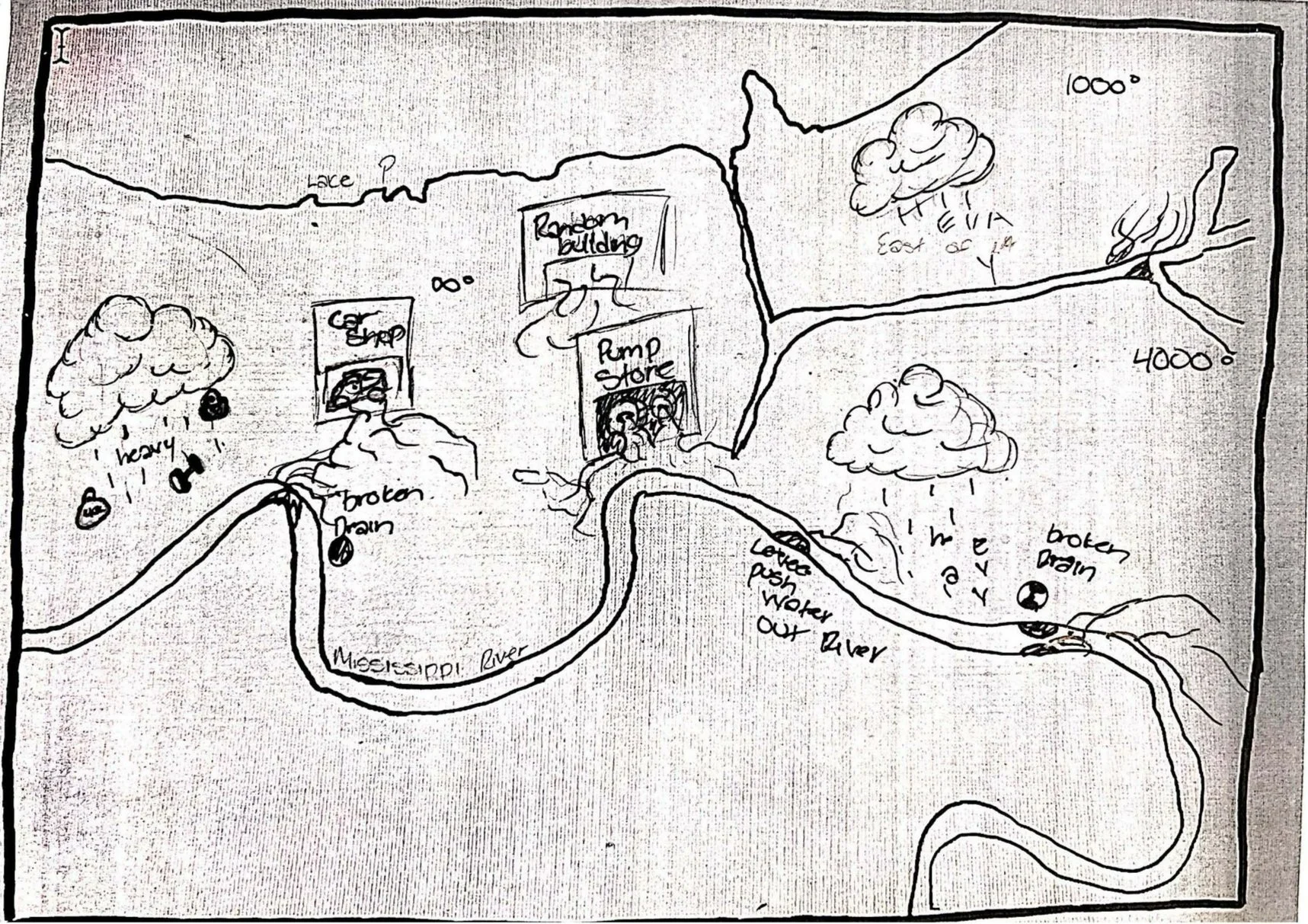
Students develop models early in the unit to elicit their initial ideas and questions about why New Orleans is so susceptible to flooding.
-
![]()
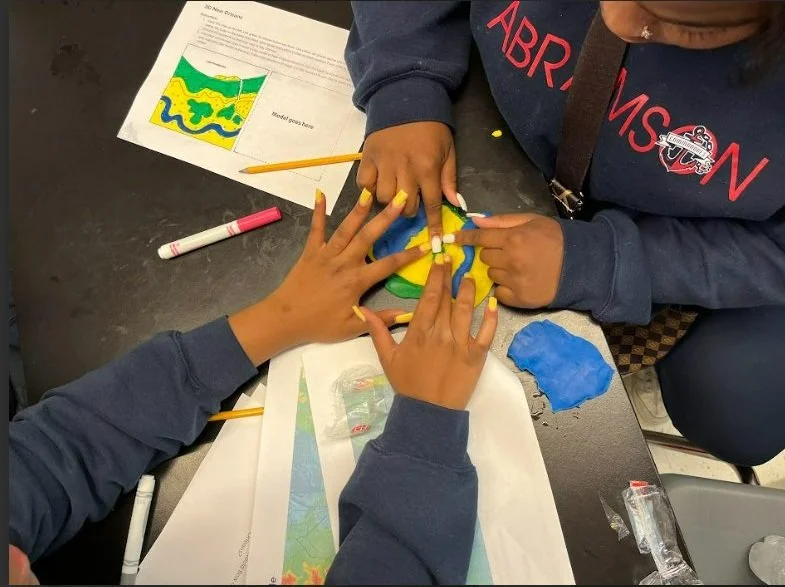
Students create a 3-D topographic model as part of Ripples to Waves to help them understand why New Orleans is so vulnerable to flooding.
-
![]()
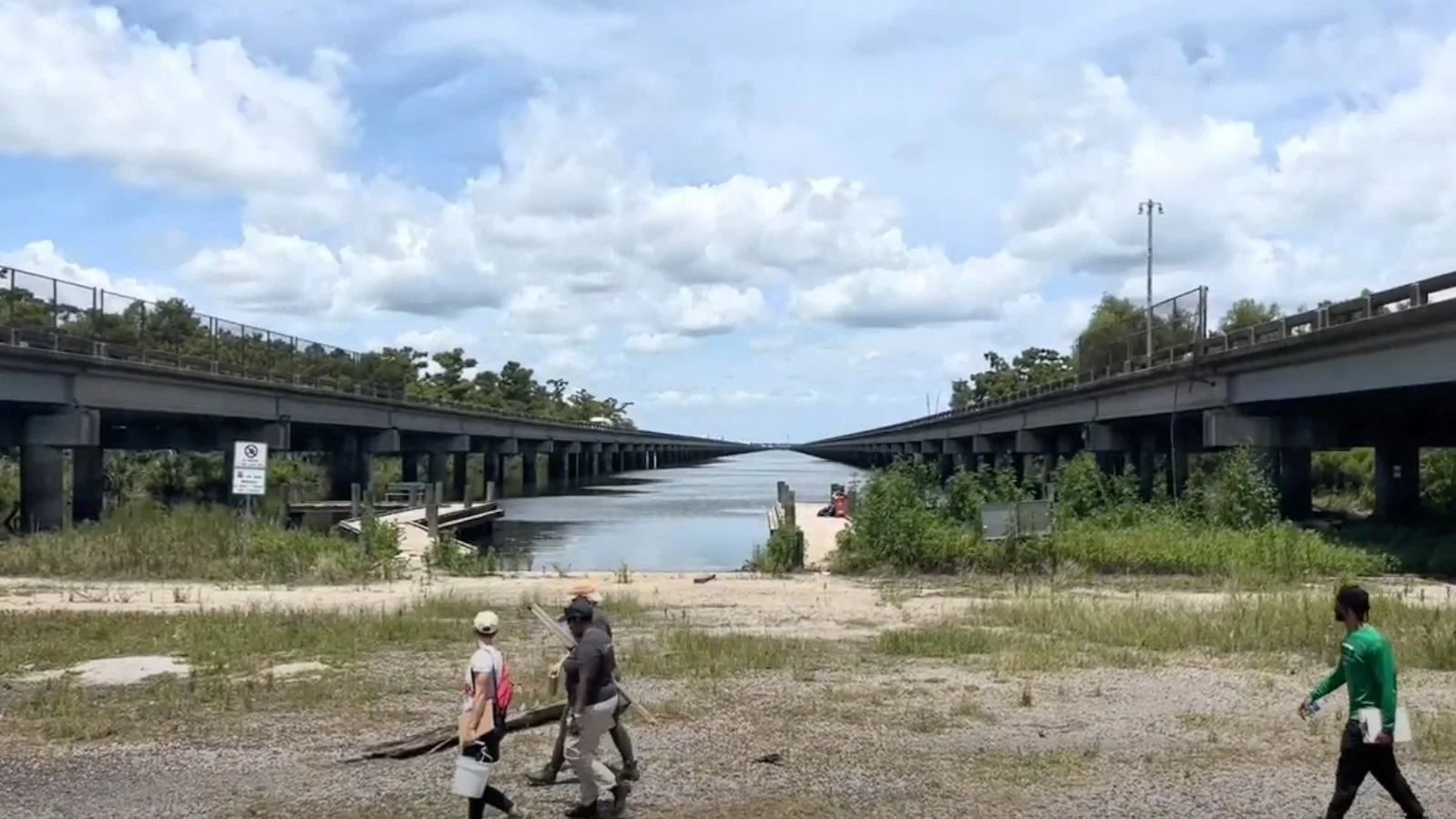
Our curriculum design process began with a series of place-based excursions with the design team, which included Collegiate Academies administrators and teachers, researchers and environmental educators from our partner organizations, and Ripple Effect staff.
-
![]()
The design team conducts field investigations as part of the curriculum development process, to explore how the curriculum might include investigations both in and outside of the classroom.
-
![]()
The development team tracked the flow of water through local green infrastructure sites to understand how green infrastructure helps mitigate the impacts of heavy rain.
-
![]()
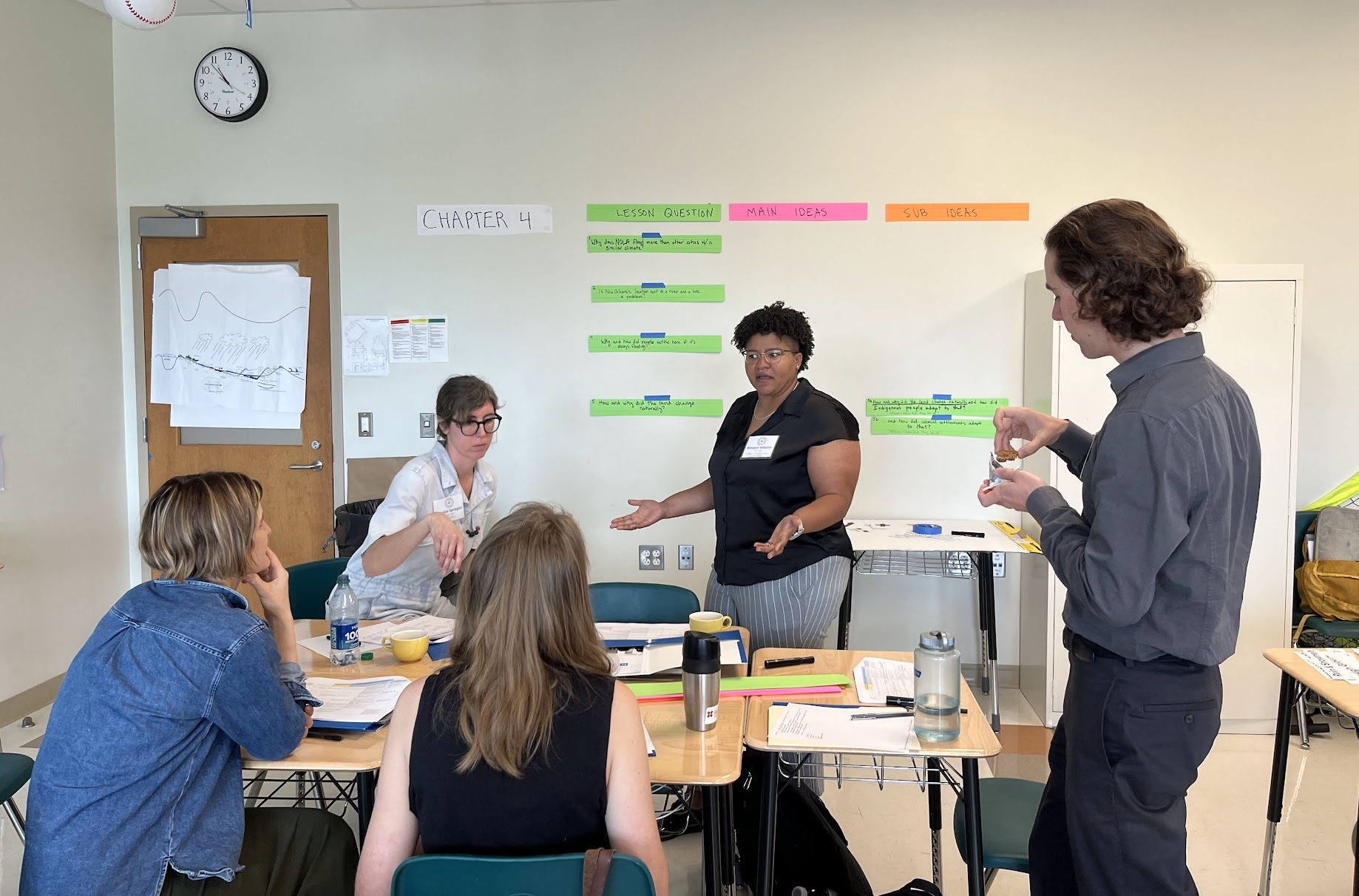
Curriculum development is anchored by a series of multidisciplinary workshops, in which educators, researchers, designers, and curriculum experts work together to design a standards-aligned (LSSS, NGSS), 9-week curriculum unit.



Partners and Contributors
Unit 1: Stormwater Flooding
Curriculum Design and Development: Brooke Sprague, Claire Anderson, Karen Marshall, Laura Nicholas
Curriculum Writing Partner: Lindsey Mohan, BSCS Science Learning
Professional Learning Design and Implementation: Claire Anderson, Karen Marshall
Educators: Damond Staples, Dana Durio, D’Andria Barnes, Monica Jackson Greene, Javontay Sanville
Content Advisors: Josh Lewis, Tulane University ByWater Institute; Meagan Williams, City of New Orleans; Madeline Foster-Martinez, University of New Orleans; Robert Mahon, University of New Orleans
School Partner: Collegiate Academies
Unit 2: Gulf of Mexico Dead Zone
Curriculum Design and Development: Brooke Sprague, Claire Anderson, Karen Marshall, Laura Nicholas
Curriculum Writing Partner: Lindsey Mohan, Candice Guy-Gaytan, BSCS Science Learning
Professional Learning Design and Implementation: Claire Anderson
Educators: D’Andria Barnes, Anginique Andrews
Content Advisors: Murt Conover, Louisiana Universities Marine Consortium
School Partner: Collegiate Academies
Unit 3: Hurricanes
Curriculum Design and Development: Laura Nicholas, Brooke Sprague, Claire Anderson
Curriculum Writing Partner: BSCS Science Learning
Content Advisors: Murt Conover, Louisiana Universities Marine Consortium, Julie Malmberg and Becca Hatheway at UCAR Center for Science Education
School Partner: Collegiate Academies
Special thanks to our funders: National Academies Gulf Research Program, The Selley Foundation
Related Projects
Summer Science Studio
Bringing elementary school teachers and students into the field
Continue exploring our vision for water literacy education in the areas of teacher learning, field-based learning, and strategic partnerships.
Want to stay in the loop on water literacy?
Sign up for our newsletter to receive quarterly updates.