
Summer Science Studio
Summer Science Studio
A field-based teaching and learning intensive for elementary teachers and students
Project initiated in 2023, ongoing.

Third graders noting their observations at Audubon Louisiana Nature Center
“I learned that outside can teach us.”
— 4th grade student
Program description
Summer Science Studio is a field-based teaching and learning intensive that pairs professional development for teachers with immersive, inquiry-based summer learning for students. Designed for 3rd through 5th grade teachers and students, the Studio builds capacity for field-based science practice through direct engagement with real, local phenomena.
The Studio is built to change. Each iteration takes on a local science topic and, at times, brings in other disciplines to expand how students and teachers experience inquiry-based learning. This design lets Ripple Effect test and refine new curriculum ideas within a consistent, field-based model.
Teacher Learning
Summer Science Studio supports elementary school teachers in understanding how and why to lead student engagement in NGSS-aligned science practices, helping them develop the belief, confidence, and skill to guide students through a learning process that is motivated by their questions and ideas.
Teachers receive daily live coaching in the classroom from program leaders and participate in professional learning each afternoon, analyzing student work, using data to adjust lesson plans, and practicing tricky aspects of the curriculum with feedback from fellow teachers and program leaders.
Field-Based Learning
Field-based learning is at the core of the Studio model. Teachers begin with several days in the field, building content knowledge and investigation skills before students arrive. Throughout the program, a two-part field-based structure scaffolds the experience for both teachers and students, starting with investigations in familiar environments before extending into new ones
District-level Partnership
Since 2021, Ripple Effect has worked closely with KIPP New Orleans administrators, school-based instructional leaders, and elementary science teachers to design and implement district-wide interventions that improve the quality of science instruction, creating more opportunities for students to investigate locally relevant phenomena and building teacher capacity to leverage student ideas. Summer Science Studio is an extension of this work.
Program Iterations
Summer Science Studio has taken different forms over time, each building on what came before.
Puddles to Floods (2023–2024) focused on stormwater flooding and urban water systems in New Orleans, piloted with KIPP New Orleans.
After the Rain (2026–present) builds on that foundation in collaboration with New Voices New Orleans, bringing music and creative expression alongside science inquiry.
-
![]()
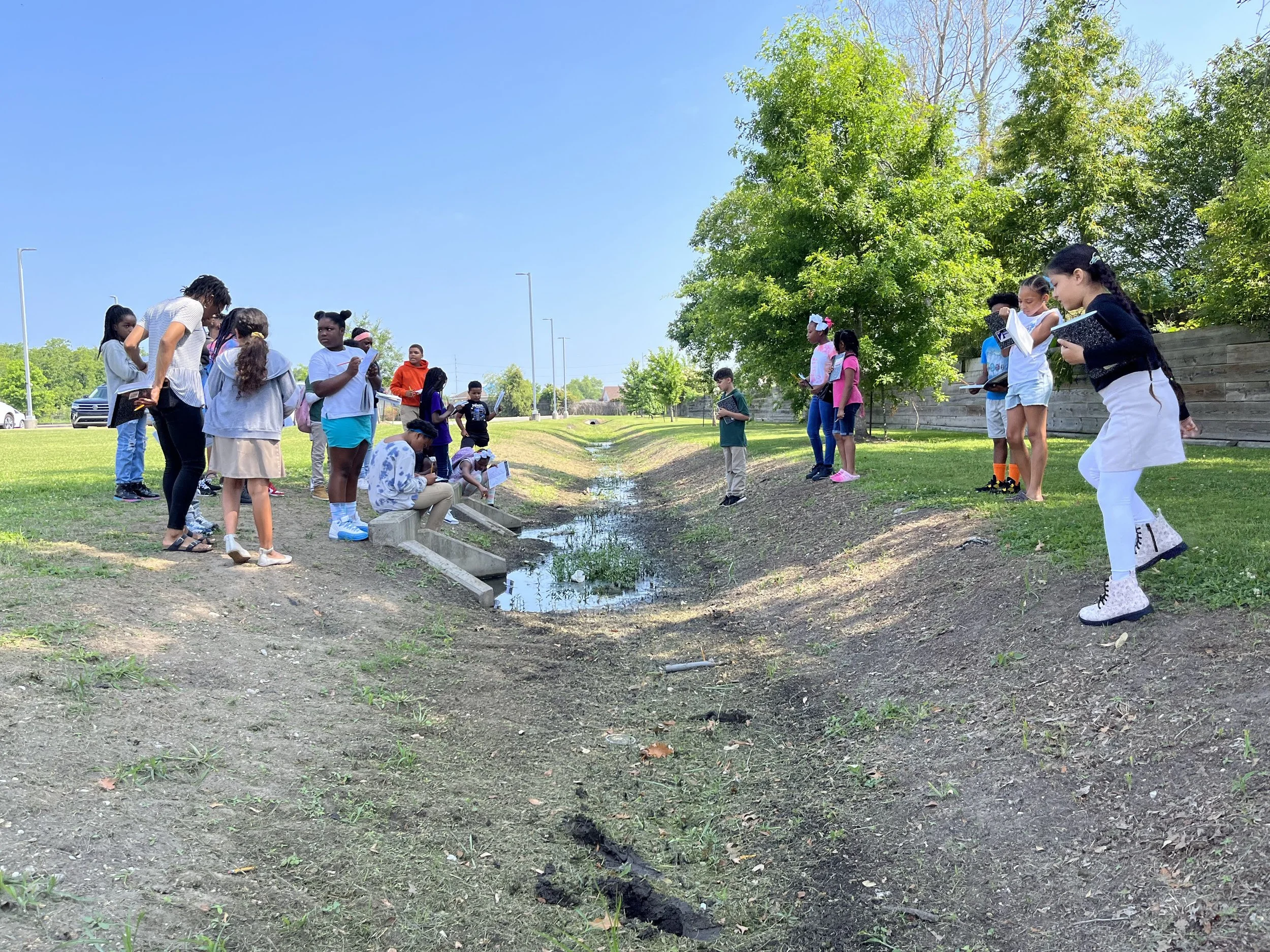
Teachers led students on a walk around their schoolyard. They identified areas that flooded frequently, considering why water was collecting in some areas but not others.
-
![]()
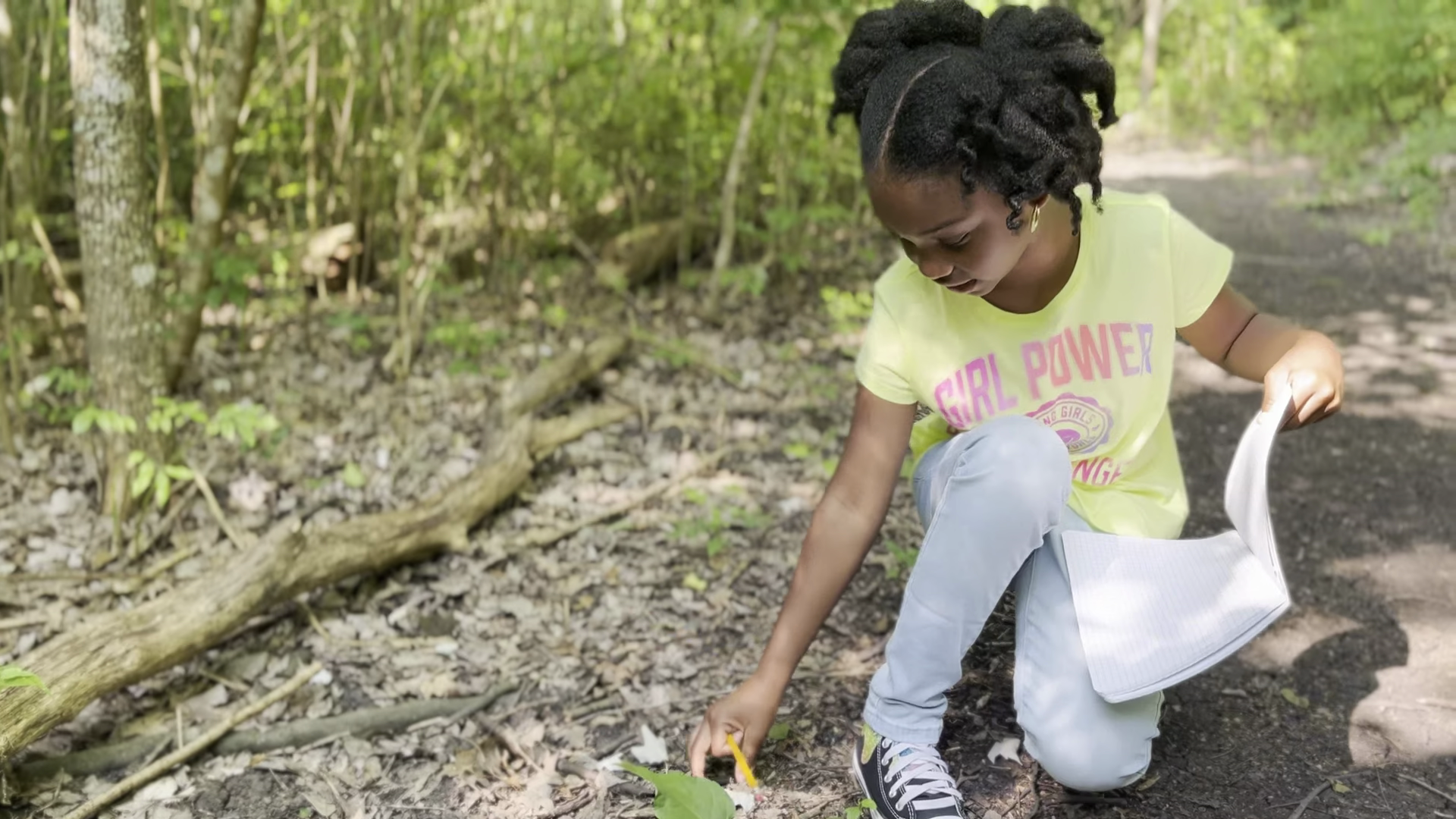
Before developing an initial model of the phenomenon, students visited a nearby bottomland hardwood forest—just an 8-minute drive from their school—to record more observations and think about why that environment doesn’t flood during heavy rainstorms.
-
![]()
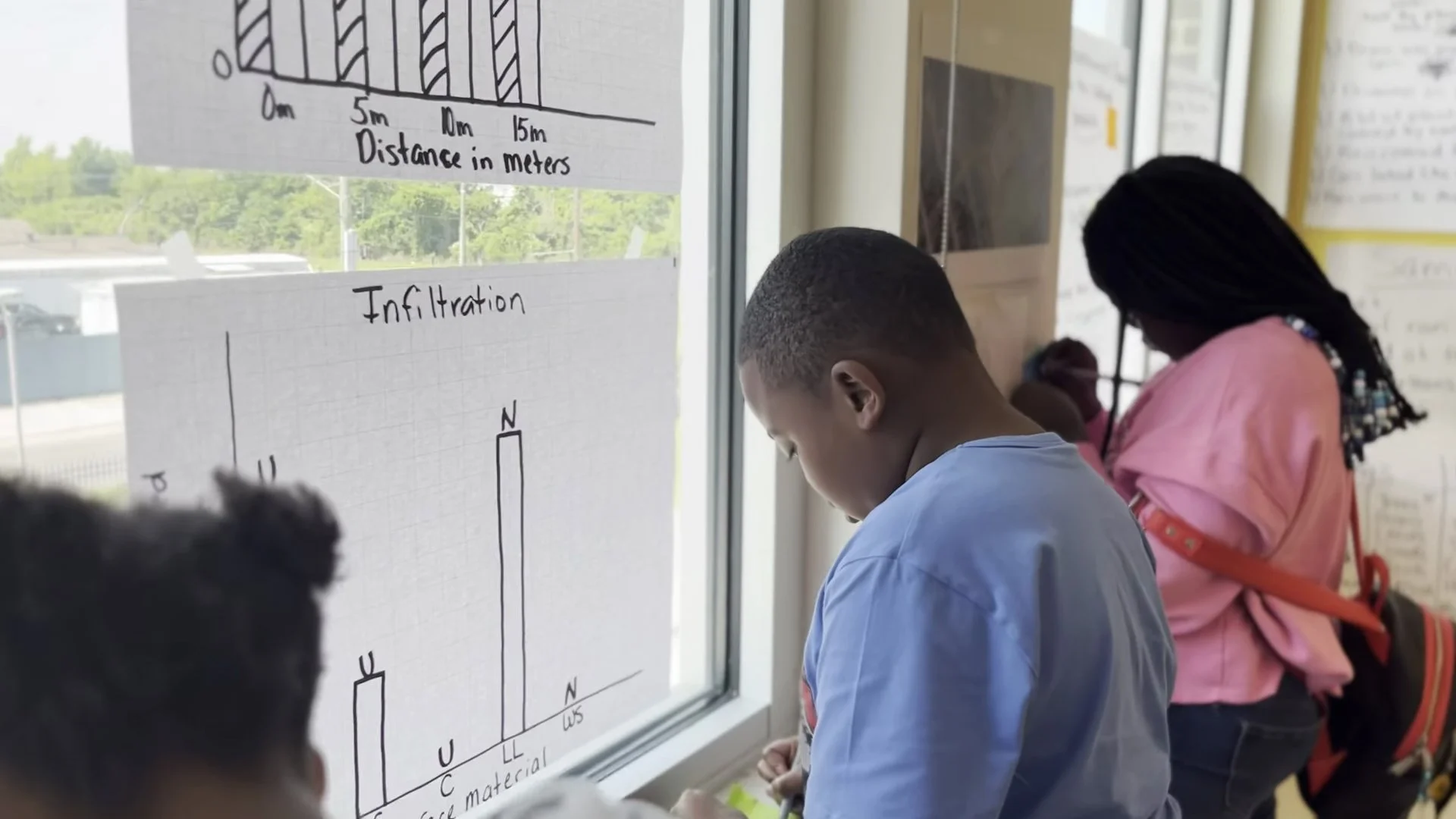
Students graphed their infiltration data on a bar chart and then took a gallery walk to compare results among groups. Ms. Johnson and Ms. Henderson guided them through a discussion on what patterns they noticed.
-
![]()
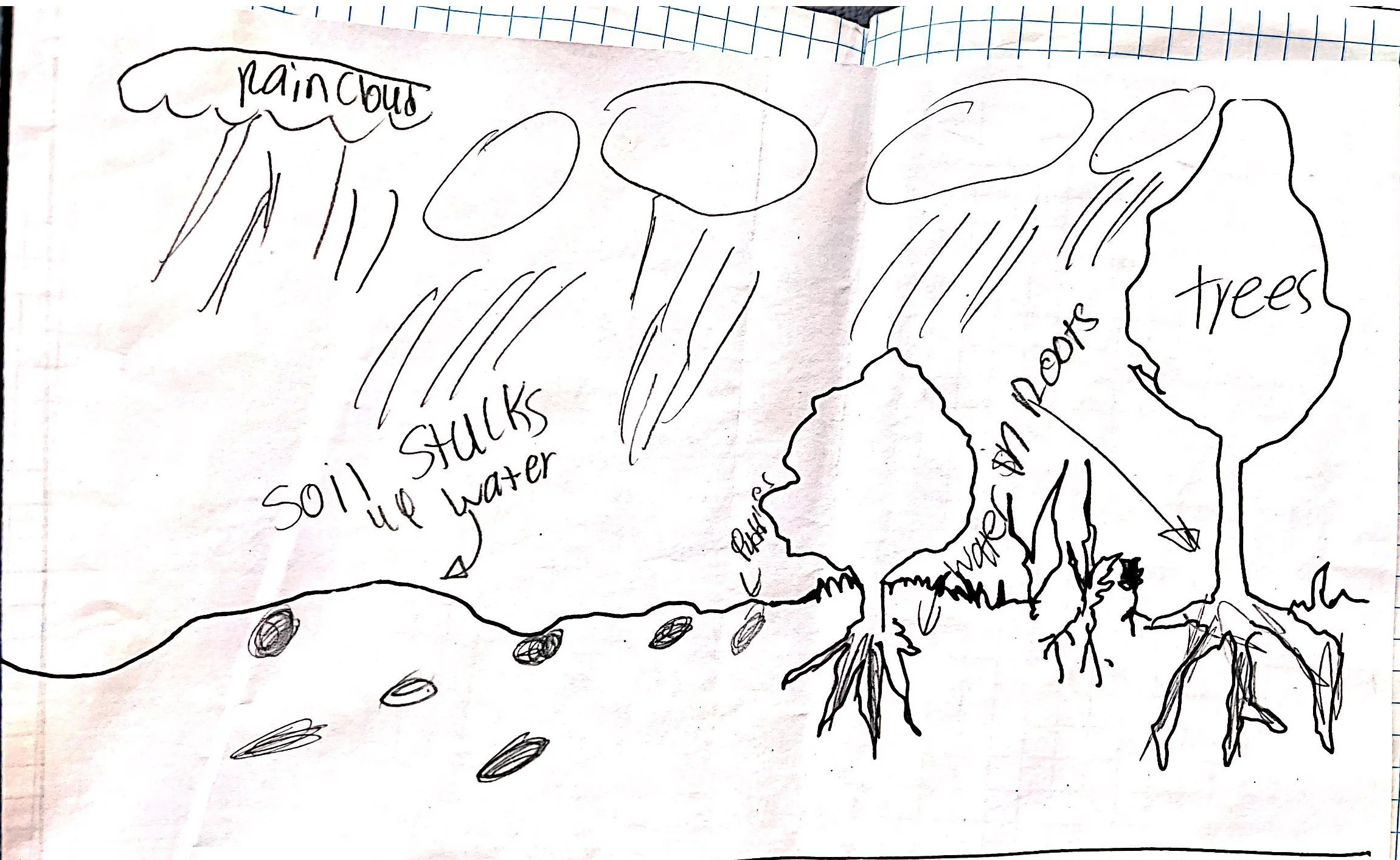
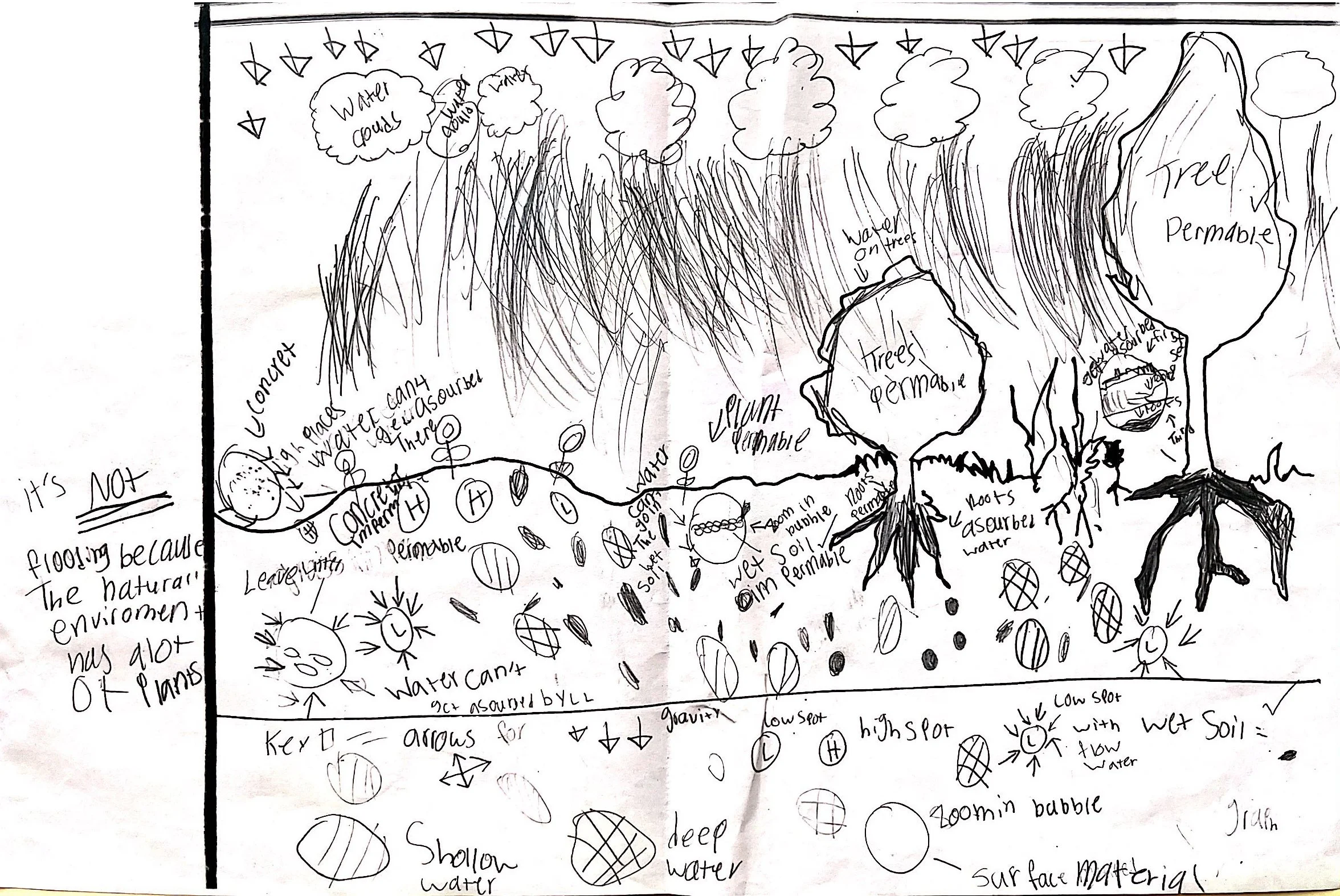
A third grader’s initial model of the natural setting, with her final model at right.
-
![]()
The third grader’s final model shows water being absorbed by permeable surfaces but not impermeable ones, water flowing from high spots to low spots and collecting there, and the roots of plants absorbing water.
-
![]()
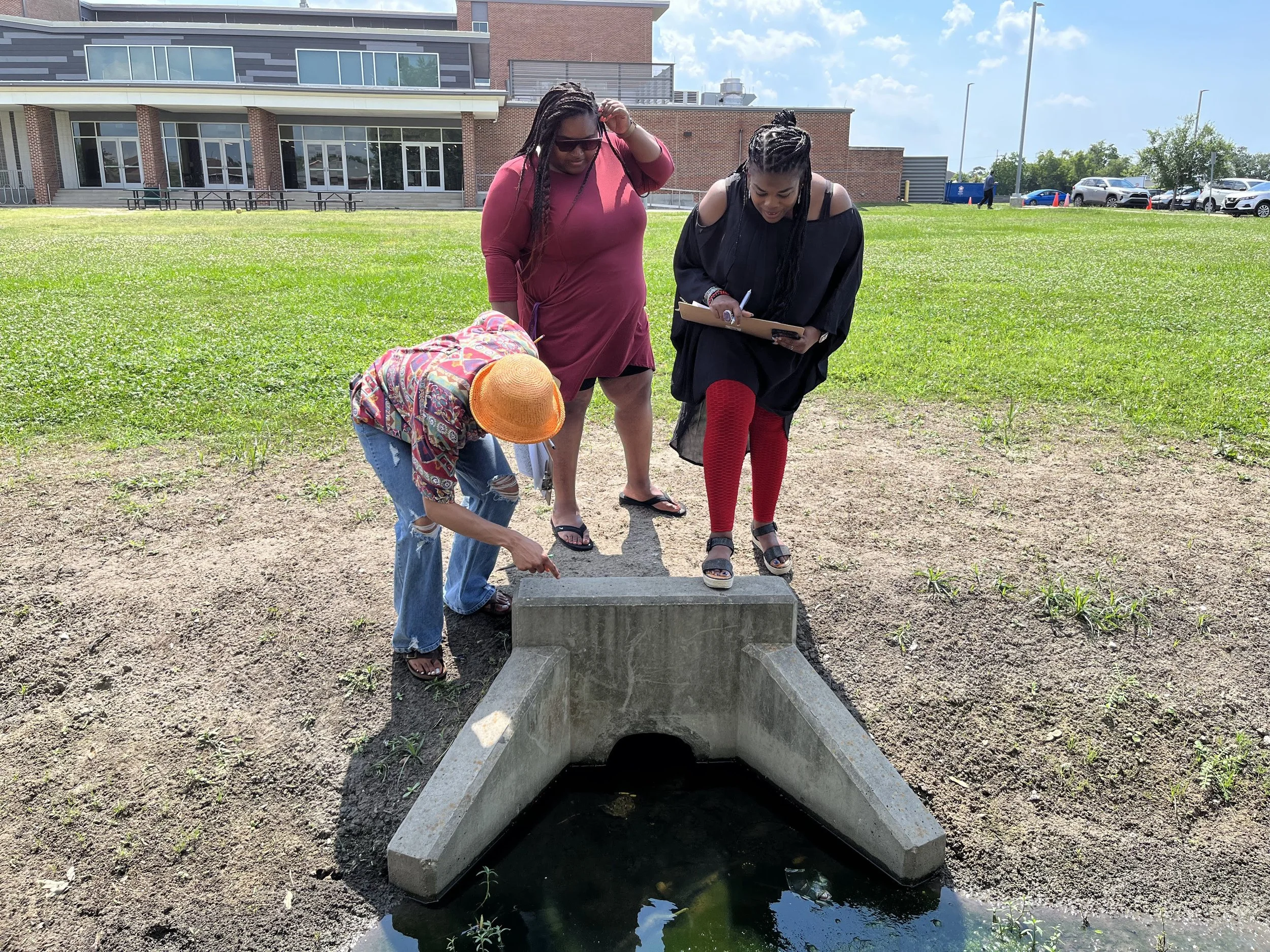
As part of their professional development, teachers began the program with four days of field-based learning, giving them an opportunity to familiarize themselves with the science content, curriculum structure, and field-based investigation protocols before students arrived.
-
![]()
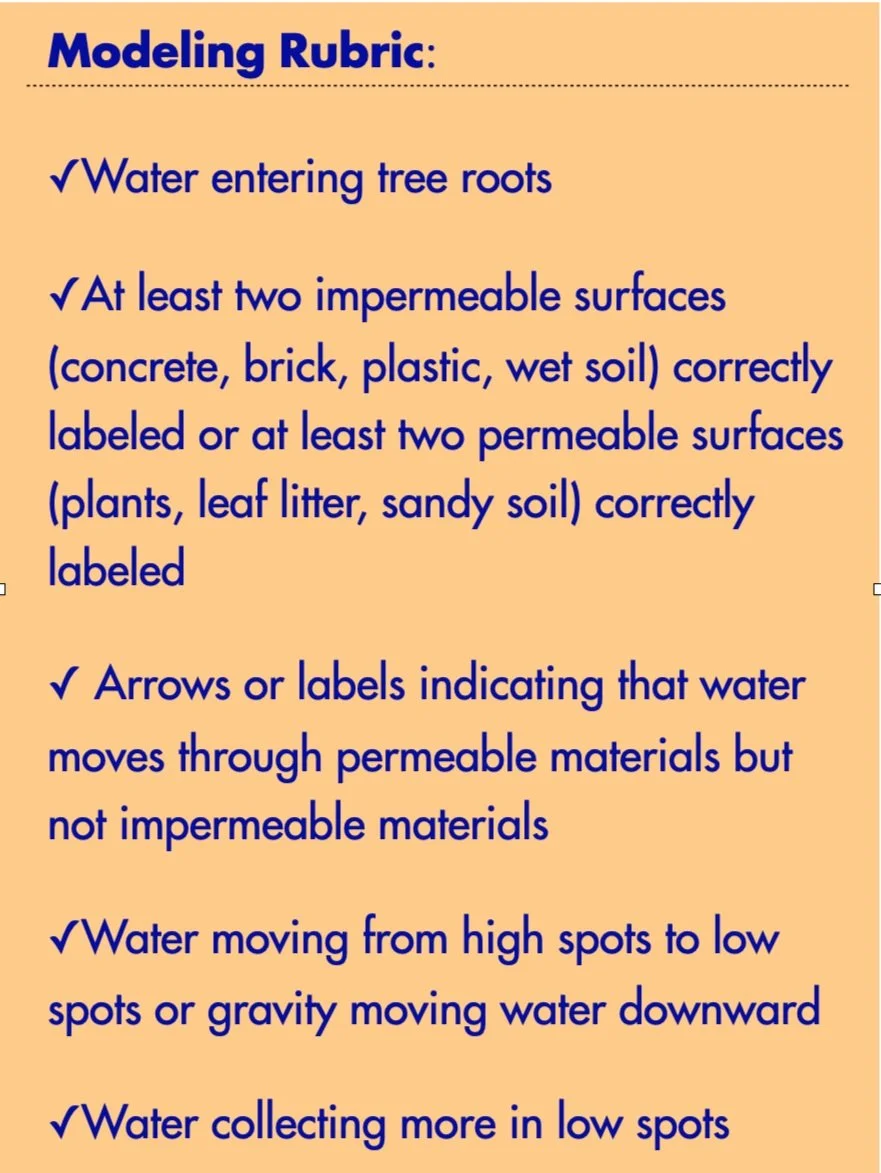
Program leaders developed assessment rubrics for models based on the Gotta Have Checklists that classes developed together.


Impact & Evaluation
In Year 1 of the Puddles to Floods program, our main goal was to build teachers’ field-based inquiry facilitation skills, and in turn, produce measurable gains in students’ understanding of urban stormwater flooding. In 2023, with the help of an external third party evaluator, Ripple Effect measured progress toward these outcomes.
We evaluated student learning outcomes by assessing their explanations, models, and model interviews.
Student Learning
60%
Improvement in teachers’ self-reported ability to lead students in conducting field-based investigations
“We did experiments during the year, and yeah, they did have to collect data, but that information didn’t go anywhere after that. It was just like ‘Alright, you did this experiment. You wrote these numbers down. Onto the next thing.’ But with this, it was like, ‘What do these numbers mean if our question is ‘Why does it flood more in the urban environment than the natural one?’”
— Jazmine Henderson, Teacher, 3rd Grade
Teacher Learning
We evaluated teacher learning outcomes through surveys and a focus group conducted by a third party evaluator.
56%
Improvement in student scores from their initial to final models.
“The urban environment flooded because on the urban environment surface material is mostly covered with concrete, and concrete is impermeable. I know because it absorbed 0mL.”
— Brooklyn, 3rd grade
Partners and Contributors
Puddles to Floods (2023–2024)
Curriculum Design and Development: Claire Anderson, Karen Marshall, Brooke Sprague
Educators: Jazmine Henderson, Shermaine Johnson, Lauren Johnson, TJ Bentley, Quiana Stewart
Evaluator: Hatch Creative Strategy
School Partner: KIPP New Orleans, KIPP East Primary
After the Rain (2026–present)
Curriculum Design and Development: Claire Anderson, Trey Pratt (New Voices New Orleans), Brooke Sprague
Education and Implementation: Claire Anderson, Trey Pratt, Emily Howe, Jacqueline Amezqua
Partner Organization: New Voices New Orleans
Evaluator: Hatch Creative Strategy
School Partner: KIPP New Orleans, KIPP Leadership Primary
Special thanks to our funder: National Academies Gulf Research Program
Want to stay in the loop on water literacy?
Sign up for our newsletter to receive quarterly updates.