
Reenvisioning Primary Science Education KIPP New Orleans
Reenvisioning Primary Science Education KIPP New Orleans
Catalyzing district-wide standards-based science instruction through water literacy
2021 – 2025

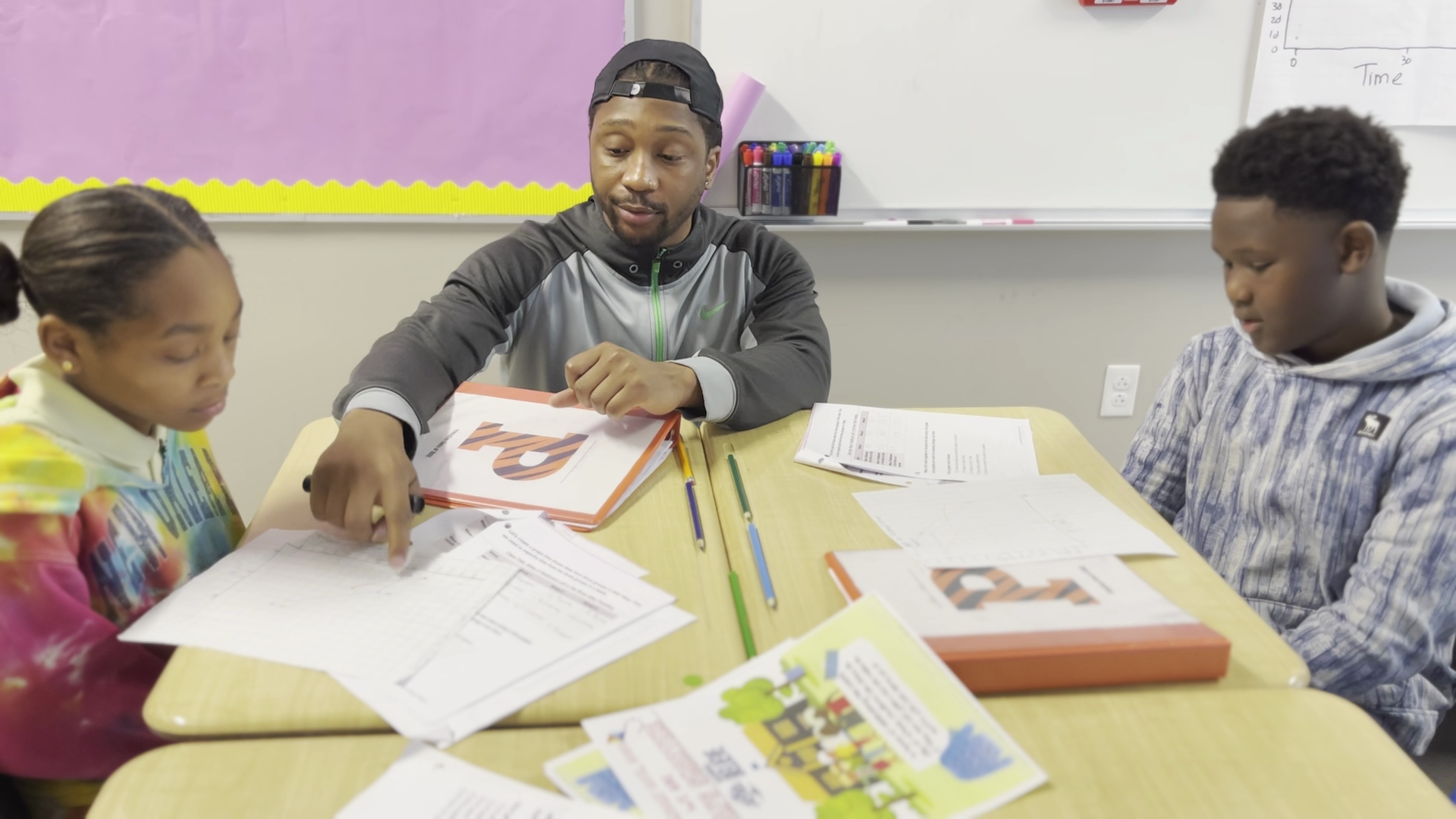
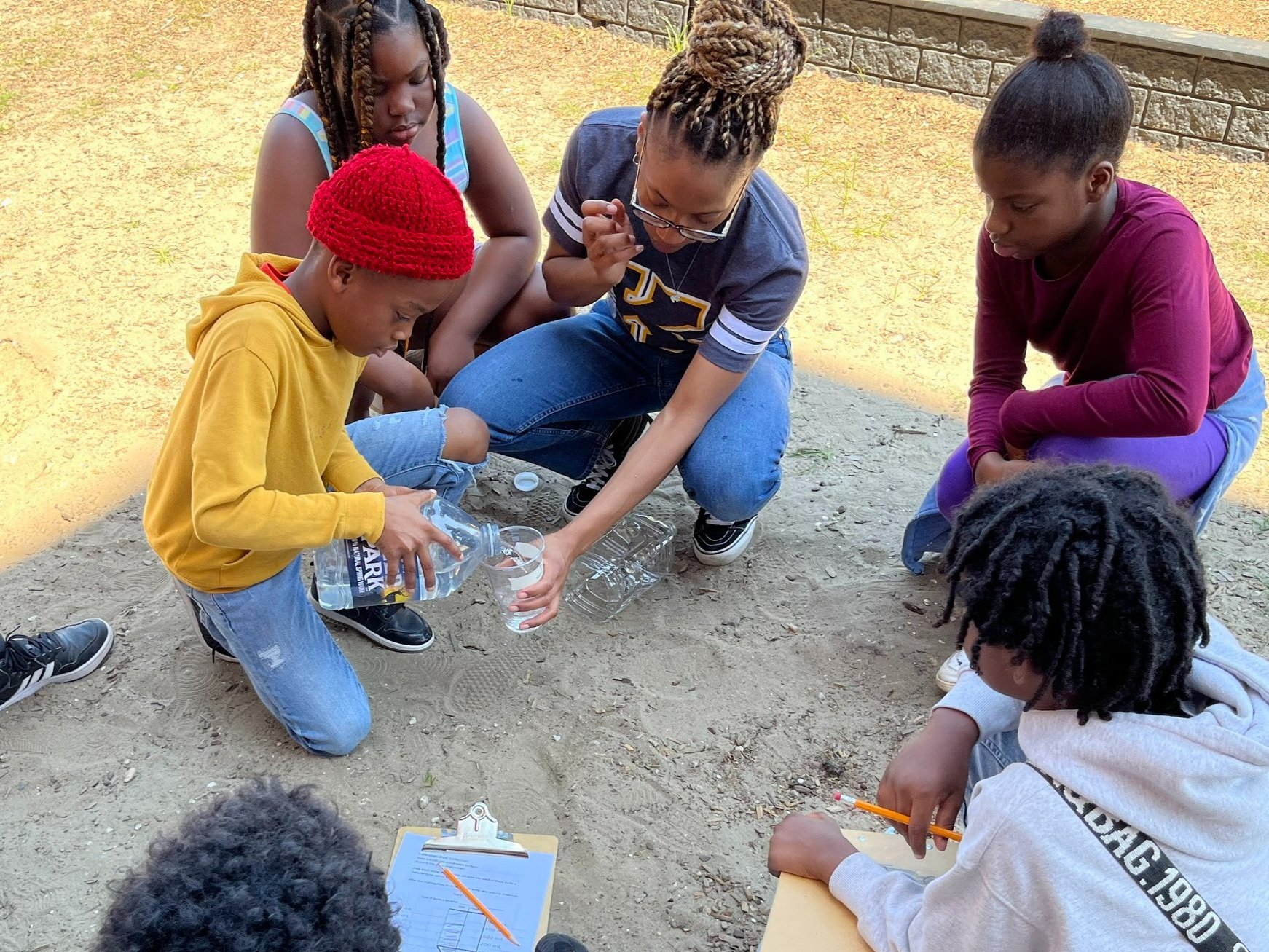
Ripple Effect Fellow Mr. Busbee introducing students to an investigation into river flooding using water and sand
Project Description
Over four years, Ripple Effect and KIPP New Orleans worked together to reimagine 3rd and 4th grade science instruction — building a model where students investigate the water and environmental issues shaping their own communities through rigorous, inquiry-based science.
The partnership had two intertwined goals: strengthening the quality of everyday science instruction across the network, and making locally relevant water and environmental issues a meaningful part of that instruction.
Our work together was guided by this shared vision:
On any given day, in any given primary school classroom:
students are engaged in authentic inquiry and independent sense-making about culturally and locally relevant anchoring phenomena.
teachers are using research-based best practices to elicit student ideas about science issues and processes, and are effectively leveraging those ideas to help students build toward increasingly sophisticated science explanations.
school-based and regional instructional leaders have the tools and information they need to describe and measure how all levels of the organization—from students and teachers to KNOS regional leaders—will embody and pursue the long-term vision for excellence in science instruction.
To realize this vision, Ripple Effect and KIPP New Orleans designed and implemented four interconnected elements: locally relevant water science mini-units (10–15 lessons each) aligned to Louisiana science performance expectations; region-wide professional development days grounded in the OpenSciEd instructional model and curriculum, where teachers and coaches learned and practiced inquiry-based instructional routines together; live classroom coaching by Ripple Effect staff, including modeling and co-teaching; and new assessment tasks measuring student growth in key science and engineering practices.
Why this matters:
Achieving the transformational change we envision requires the cooperation and collaboration of multiple layers of educational systems, including teachers and school-based and district-level administrators, who must work together over years to shift the underlying mindsets and everyday teaching practices of their science programs. Without broad support and a shared commitment to realizing this vision throughout K-12 systems, the speed with which communities must adapt to climate-related issues will continue to outpace the rate at which educational systems can respond to these changes.
Through this project, Ripple Effect is exploring what it takes to build schools’ internal capacity to sustain—and continually improve—their everyday science instruction. This includes attending to all parts of a teacher’s experience across an entire school year, from the selection and implementation of a core curriculum, to administrator support for teaching, to assessment design and professional development.
-
![]()
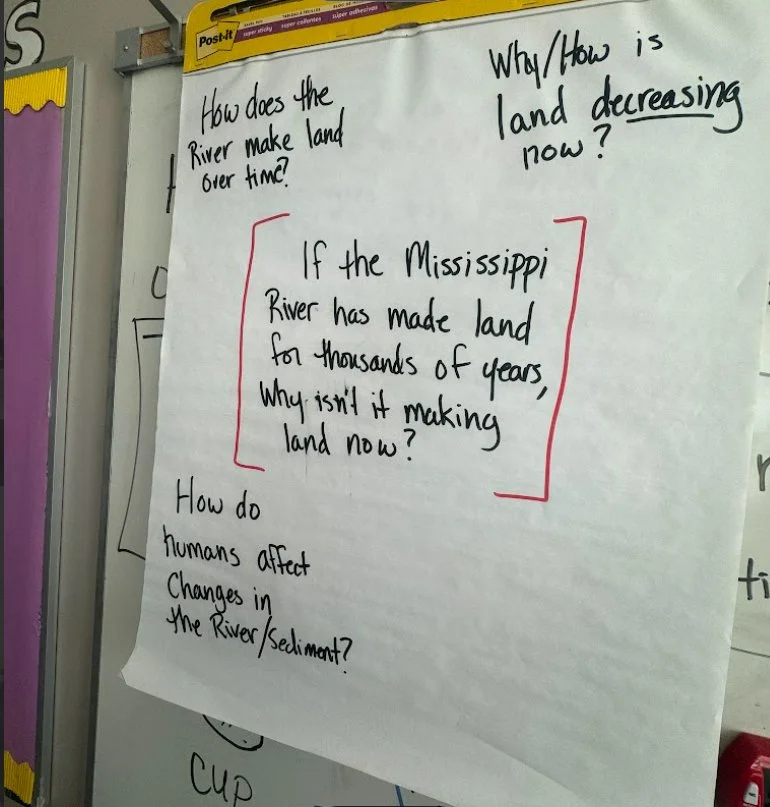
Driving question to which the class returns throughout the unit.
-
![]()
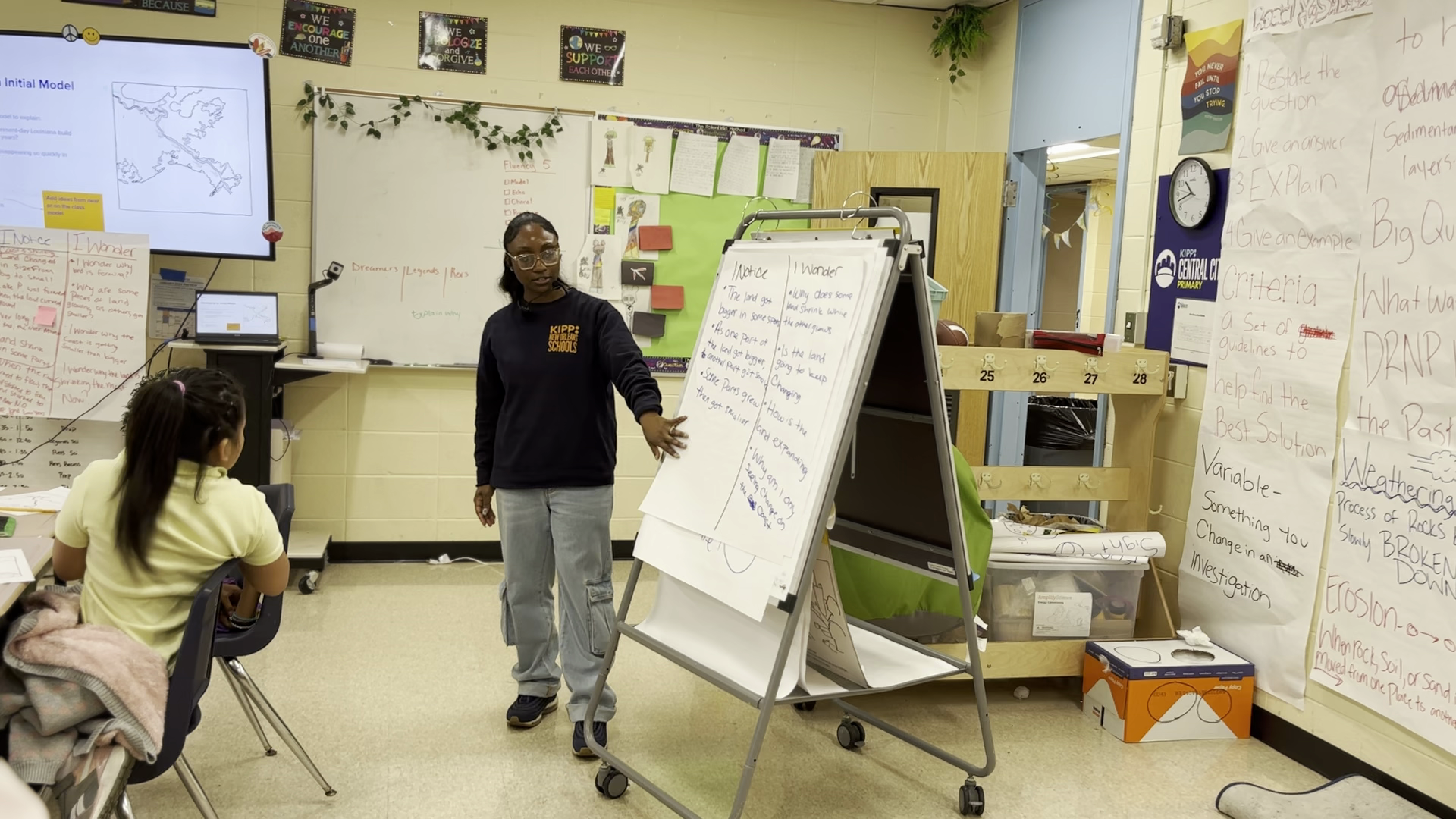
Ms. Gray prompting and recording students’ observations.
-
![]()
Mr. Busbee providing guidance during group work.
-
![]()
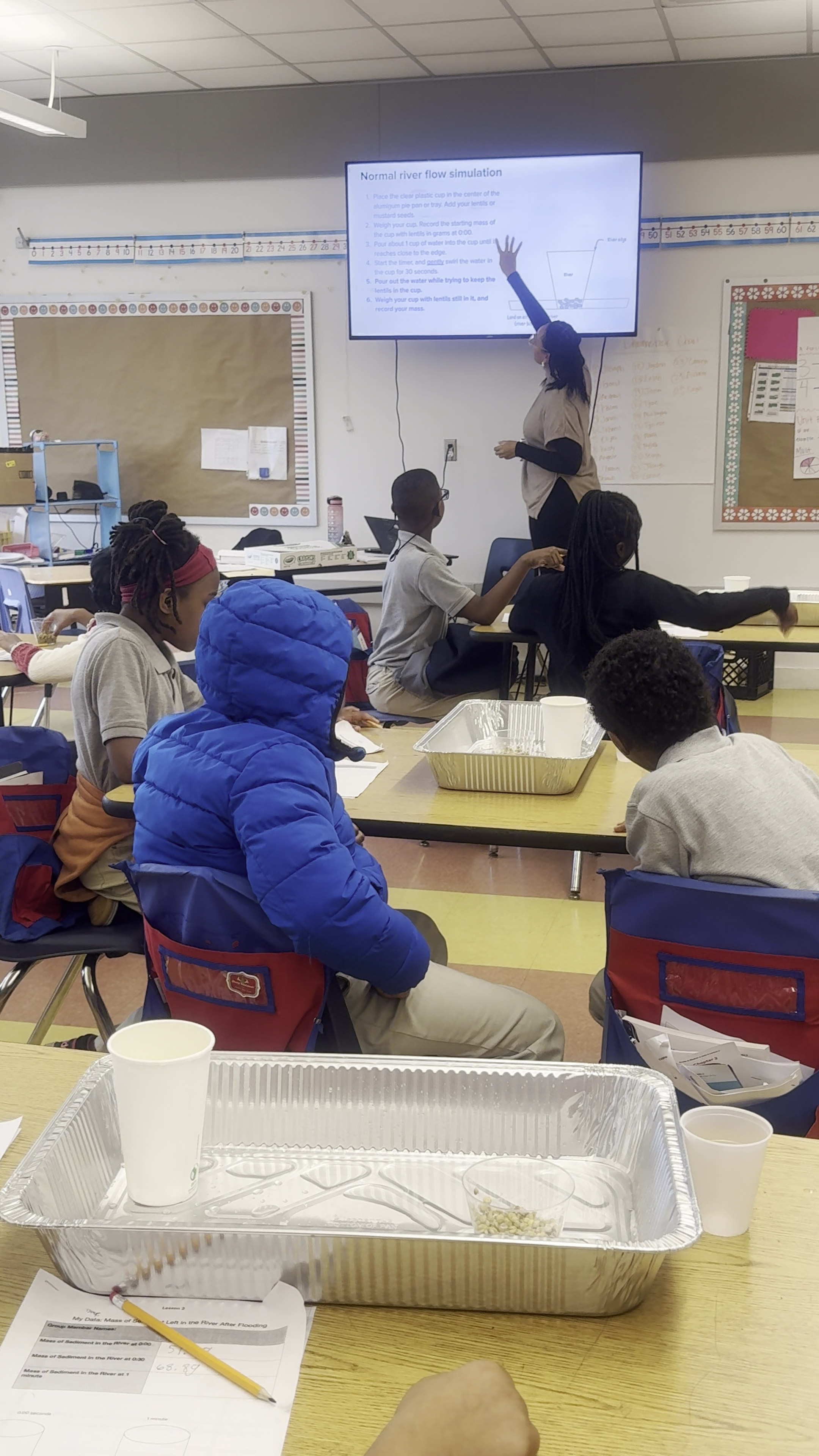
Ms. McLin setting up a river flow simulation model.
-
![]()
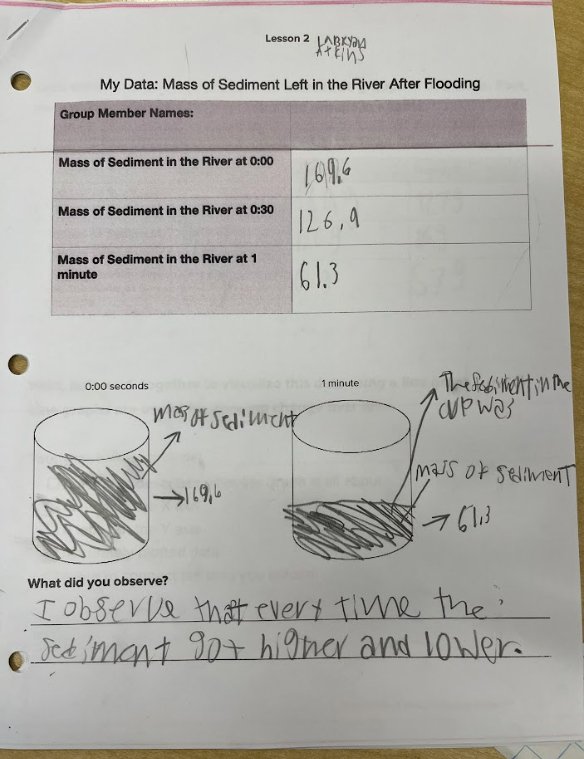
Example of student’s lab notebook.
-
![]()
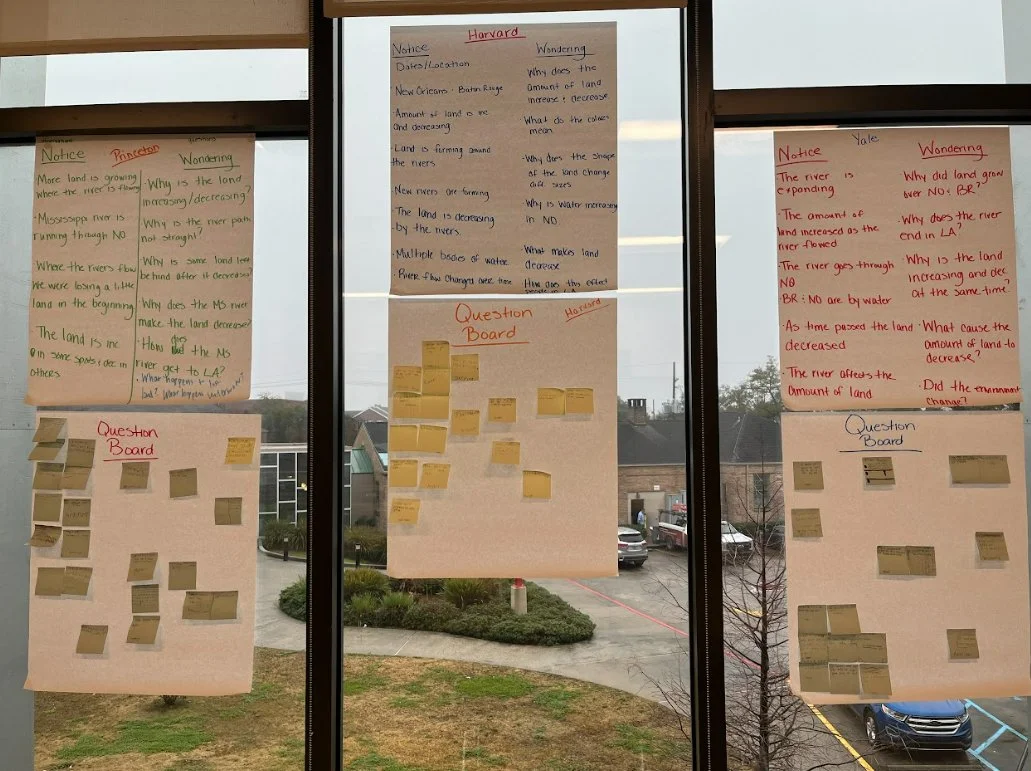
In-class “gallery” of everyone’s noticings, wonderings, and questions.
Project Partners
Related Projects
Bringing elementary school teachers and students into the field
Continue exploring our vision for water literacy education in the areas of teacher learning, curriculum design, and field-based learning.
Want to stay in the loop on water literacy?
Sign up for our newsletter to receive quarterly updates.